
Custom Molding with Thermoset Plastics at Work: Military Industry Edition
February 10, 2026Designing for Reaction Injection Molding: Best Practices and Considerations
April 7, 2026The main difference between thermoplastics and thermosetting plastics (thermosets) is how they react to heat. Thermoplastics soften and can be remelted multiple times, making them recyclable and easier to reshape. Thermosets form permanent chemical bonds during curing, which means they cannot be remelted but provide superior heat resistance, structural stability, and chemical resistance.
Key Differences Between Thermoplastics and Thermosets
The differences extend beyond heat reactivity and are significant when determining the best material for your application.
Understanding the distinctive applications and properties of thermoplastics and thermosets, along with differences in how each is processed or manufactured, can help both manufacturers and product designers improve upon their products.
The following table provides an overview of the key differences between thermoplastics and thermosets.
| Property | Thermoplastics | Thermosets |
| Heat response | Soften and melt when heated | Permanently cured and do not melt |
| Molecular structure | Linear or branched polymers | Cross-linked polymer structure |
| Recyclability | Typically recyclable | Not recyclable |
| Heat resistance | Moderate | High |
| Manufacturing processes | Injection molding, extrusion, thermoforming | Reaction Injection Molding (RIM), Resin Transfer Molding (RTM) |
| Common applications | Packaging, piping, consumer goods | Industrial housings, vehicle components, agricultural equipment |
How Thermoplastics and Thermosets React to Heat
Thermoplastics and thermosets are both polymers, but they behave differently when exposed to heat. Thermoplastics soften and melt when heated, while thermosets keep their form and remain solid when reheated after curing. The ability of thermoplastics to be remelted makes them ideal for applications that use recycled material, while products made from thermosets can withstand high temperatures without losing their shape, meaning they are more durable.
Thermoplastics Processing
When heated, thermoplastics soften and eventually become fluid. Processing thermoplastics involves no chemical bonding, which allows the material to be remolded and recycled without affecting its material properties. The properties of thermoplastic resins can vary significantly, but materials made from them tend to resist shrinking and offer considerable elasticity and strength. Thermoplastic resins are used for a wide range of applications, from industrial components in machinery to the plastic bags used in retail stores.
Advantages of thermoplastics include:
- Adhere well to metal
- Allow for high-quality finishes
- Capable of reshaping after reheating without much effect to material properties (recyclable)
- Chemical- and detergent-resistant
- Good electrical insulation properties
- Enhanced anti-slip properties
- Somewhat resistant to impact
- Offer options for both hardened crystalline and rubbery surfaces
- Resistant to chipping
- Resist corrosion well
Disadvantages of thermoplastics include:
- Ability to soften when heated makes them less suitable for some applications
- Often more expensive than thermosetting polymers
Examples of Thermoplastic Materials
Commonly used thermoplastic polymers include:
- Polyvinyl chloride (PVC or vinyl)
- Polypropylene (PP)
- Polystyrene (PS)
- Polyethylene (PE)
- Polycarbonate (PC)
- Polyethylene terephthalate (PET)
- Polyamide (nylon)
Thermoset Curing Process
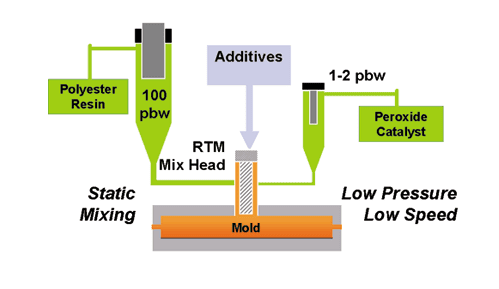
Usually produced using the Reaction Injection Molding (RIM) or Resin Transfer Molding (RTM) processes, thermoset polymers combine to form permanent chemical bonds during the curing process. These bonds between monomer chains within the material keep them from returning to their original liquid state when reheated, meaning they are heat-resistant. This makes thermosets better for applications where heat is a factor, such as in housings for electronics or appliances and chemical-processing equipment. Thermosets also have greater structural integrity due to their chemical resistance. Thermosets also possess several improved mechanical properties, so products made from them are better at resisting deformation and impact.
Advantages of thermosetting polymers include:
- Allow for flexible product design
- Can be molded with different tolerances
- Capable of varying wall thickness to improve structural integrity
- Components usually cost less than those fabricated from metals — especially for large equipment body panels
- Excellent electrical insulation properties
- Greater resistance to high temperatures
- High dimensional stability
- Exceptional impact resistance
- Highly resistant to corrosion
- Low thermal conductivity
- Lower costs for setup and tooling compared to thermoplastics
- Offers high strength-to-weight ratio to improve product performance
- Water-resistant
- Wide choice of coloring and surface finishes
Disadvantages of thermosetting polymers include:
- Cannot be reshaped nor remolded
- Not recyclable
Examples of Thermoset Materials
Commonly used thermoset plastics include:
- Polyepoxides (epoxy resins)
- Phenol-formaldehyde (PF or phenolics)
- Polysiloxane (silicones)
- Polyester resins (unsaturated polyesters)
- Polyurethanes
- Polydicyclopentadiene (pDCPD)
- Structural foams
Surface Finish and Aesthetic Differences Between Thermoplastic and Thermosets
Though some may argue thermoplastics offer better aesthetics than thermosets, thermosets can offer better aesthetics than other alternatives like metals.
Both RIM and RTM techniques readily accept secondary painting but also allow in-mold painting or coating, which involves spraying coatings or gel coat directly into a mold before the thermoset polymers are injected into it. This process bonds the paint or coating to the surface, offering better adhesion to prevent chipping, cracking, or flaking even when exposed to harsh weather conditions.
This makes in-mold coatings of thermoset materials ideal for such applications as construction machinery or other components that need to withstand extreme conditions.
When to Choose Thermoplastics vs. Thermosets
Engineers and designers often select thermoplastics when they want a product that is recyclable, flexible, and can be manufactured at high volumes. Thermosets are typically chosen when components must withstand high temperatures, heavy loads, or corrosive environments. The choice depends on the performance requirements of the final product.
Factors to consider include the following.
- Heat resistance: Thermosets maintain structural integrity at higher temperatures, while thermoplastics can soften when heated.
- Strength and stiffness: Thermosets often provide greater rigidity and dimensional stability, while thermoplastics can offer more flexibility.
- Chemical and corrosion resistance: Some thermosets perform better in harsh chemical environments, making them suitable for industrial and agricultural applications.
- Manufacturing process and production volume: Thermoplastics are often preferred for high-volume production using processes like injection molding, while thermosets are commonly used for low to medium volumes in processes such as RIM or RTM.
- Sustainability considerations: Thermoplastics can typically be melted and reused, while thermosets cannot be remelted once cured.
- Part geometry and wall thickness: Thermosets can be well suited for large, thick, or complex parts that require high structural integrity.

Industries Using Thermoplastics and Thermosets
With the basic differences between thermoplastic and thermosetting plastics established, let’s look at what applications each type of polymer has within various industries.
Applications for Thermoplastic Polymers
Thermoplastics can be found in virtually any industry, with products ranging from milk jugs to piping systems. Because thermoplastics can withstand corrosive conditions, they work well as a substitute for metals but cannot withstand high temperatures as well as thermosets.
Industries utilizing thermoplastics include:
- Construction
- Electronics
- Medical and biomedical
- Food and beverage
- Chemical
- Automotive
- Plumbing
- And many more
Applications include:
- Fabricating ropes or belts
- Insulating electrical cabling
- Liquid storage tanks
- Protective covers for rigid equipment
Applications for Thermosetting Polymers
Offering an excellent combination of chemical resistance, structural robustness, and thermal stability, thermosetting polymers are widely used throughout a range of industries, as they offer an economical means to meet many production specifications. They are easily formed into complex geometric shapes that metal components cannot easily achieve, and components made via RIM and RTM techniques allow for considerable consistency in the fabrication process.
Sectors that use thermosetting polymers include:
- Adhesive and sealant
- Aerospace and defense
- Agriculture
- Appliance and electrical
- Automotive
- Energy
- Construction
Applications include:
- Equipment for generation of chlorine and other chemicals like piping, fittings, or cell covers
- Electrical or medical equipment housings and components
- Heavy construction or transportation equipment like doors, panels, or housings
- Livestock feeding troughs and other agricultural products
- Motor vehicle and tractor parts
- Military vehicle components
Contact Us
Understanding the difference between thermoplastics and thermosets is essential for both manufacturers and product designers alike. Osborne Industries specializes in thermoset manufacturing using RIM and RTM. To compare materials, use our online tool to help make the best selection for your project. To discuss our capabilities with thermosets and how they can offer added benefits to your products or parts currently made of metal or other materials, please contact us today.
Learn More About These Plastic Molding Processes